Step 1. Start online
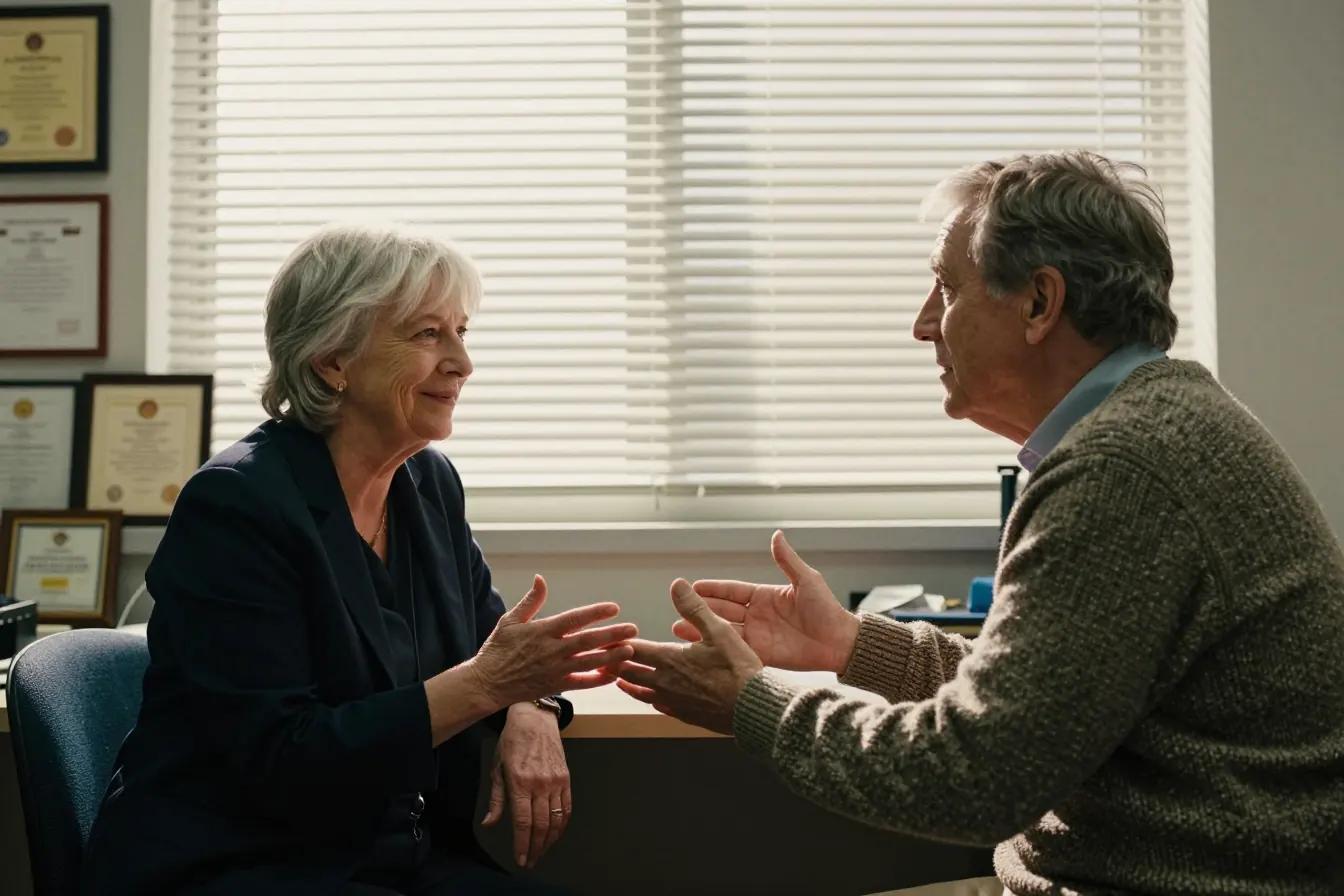
You start online, where you can see how HELIXAFE works, what it reads, and what your results can and cannot tell you. You give us your health information and your medical history. A physician reviews it, speaks with you if needed, and confirms whether HELIXAFE is right for you. If it is, they prescribe the test.
Step 2. Book your blood draw at home
Once it is prescribed, your kit ships overnight. You draw the sample at home with the kit, or at a partner location, and it goes to a CLIA/CAP-certified laboratory, where the sequencing and the analysis are done. Your report arrives within 8 weeks.
Step 3. Establish your reference
Your first test reads the changes in the genes of your application and tells you where you stand today. That reading becomes your reference: the point every future test is read against. Your result is reviewed before it reaches you, and you get help understanding what it says and what it does not say.
Step 4. Continue your program
Not everyone tests again at the same interval. Your physician decides when, based on your previous result and the program protocol. That can mean a few months, or longer.
Step 5. Test again
Now HELIXAFE has what it did not have after your first test: what happened next. Have the changes held steady? Are they building? Are they building faster? Is a pattern forming?
The first test gives you your reference. The tests that follow give you the direction, and whether the direction is changing. That is how HELIXAFE follows whether a Cancer Driver Condition is developing.
Step 6. Use it with your physician
If the pattern holds, you keep watching. If it starts to change, your physician decides whether it needs closer follow-up and whether anything is worth addressing now. If it keeps progressing, or concerns them, they decide whether further evaluation or specialist care is appropriate.
HELIXAFE reads what is changing. Your physician helps you decide what to do about it.
Why this is possible now
The changes HELIXAFE reads are very small. A scan looks for something physical, large enough to see. HELIXAFE works at a different scale: fragments of DNA in a tube of your blood. Finding those changes across dozens of genes, and measuring them precisely enough that this year’s reading can be compared with last year’s, takes very sensitive technology. Sequencing has only recently become deep enough to do it. Bioscience Institute combines advanced sequencing protocols with the computational analysis needed to make sense of those readings.
Alongside screening, not instead of it
A mammogram finds abnormalities in the breast. A colonoscopy finds polyps and cancer in the colon. Screening looks for what may already be there; HELIXAFE follows what is building before there is anything to find. Keep your mammograms, your colonoscopies and every other screening recommended for you. If you have had cancer before, keep your oncology appointments, your scans and your follow-up.
Important information
HELIXAFE reads selected somatic changes acquired during life from a blood sample, and follows them over time. The first test establishes a reference; a single test does not establish a Cancer Driver Condition. Eligibility is subject to physician review and prescription. HELIXAFE is not hereditary cancer testing, cancer screening or a cancer diagnostic test. It does not diagnose, treat, predict or prevent cancer. No outcome is guaranteed. Regulatory classification and availability vary by jurisdiction. For adults 18 and over.
Opening in the United States
Be first to hear when HELIXAFE opens
Register for the waitlist. About one email a week, only about the science.
Join the US waitlistEducational content. Not a substitute for medical advice. HELIXAFE does not diagnose, treat, predict or prevent disease and does not replace recommended cancer screenings.
Last updated